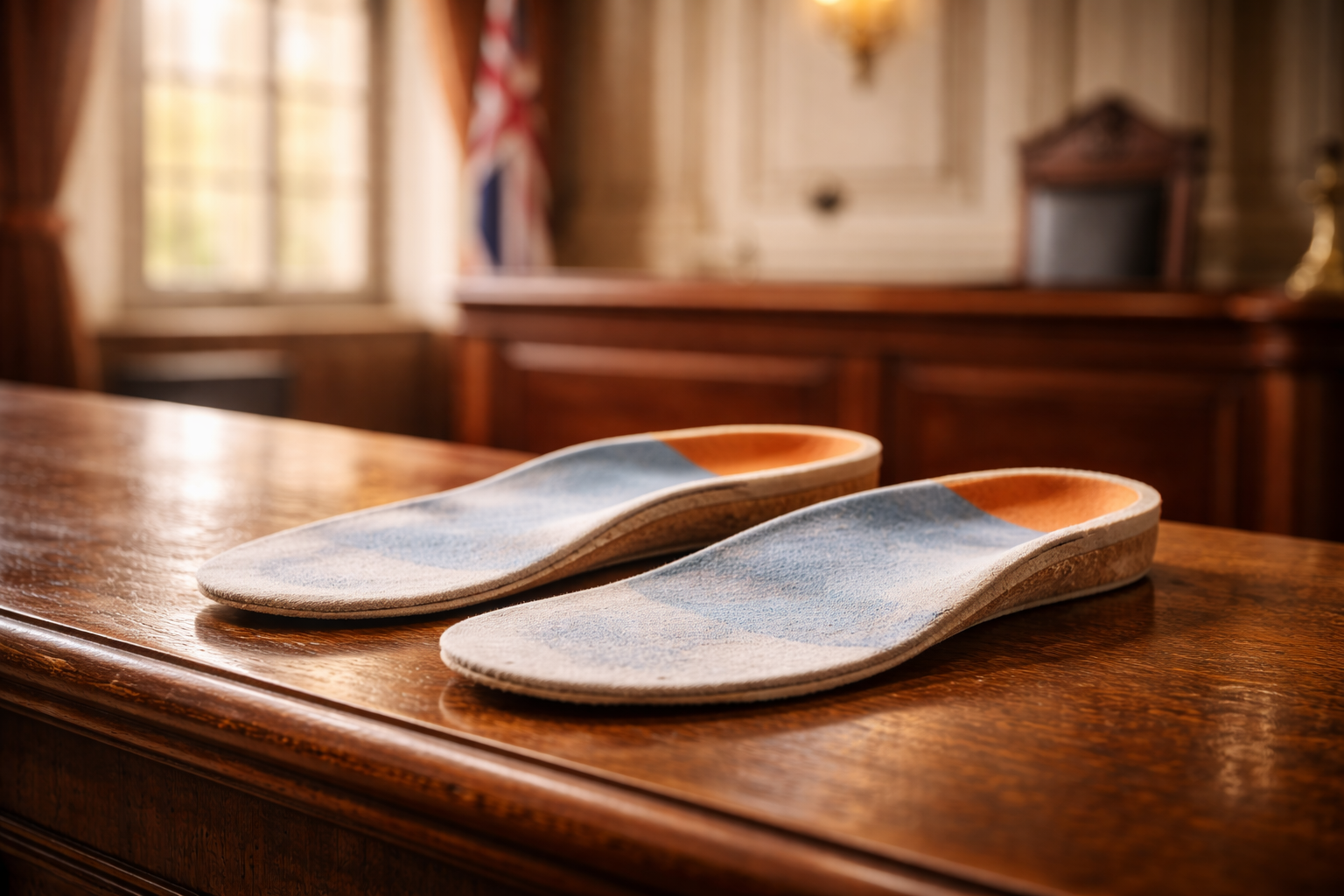
easyGroup loses High Court trademark case against small insole company Easyfeet
Sir Stelios Haji-Ioannou built one of the most recognisable brand families in the UK. easyJet. easyBus. easyHotel. More than 380 ventures carrying the "easy" prefix, all under the easyGroup umbrella.
So when a small Estonian company called Easyfeetstore started selling orthopaedic insoles online, easyGroup took them to the High Court. They also targeted the related American company Easyfeet Inc and one of its directors, Andriy Klishyn.
easyGroup's lawyers argued that the footwear businesses had infringed seven of their trademarks, including the easyJet brand itself. They also claimed that Easyfeetstore's own trademark registration for "easyfeet" was invalid.
The case went to a two-day trial in February 2026. The judge's ruling was decisive.
The ruling
Judge Richard Hacon dismissed the claim entirely. He found that the word "easy" was "the only similarity" between the trademarks, and that there was "no likelihood" of customers being confused between an airline and a company selling orthopaedic insoles.
Of the seven trademarks easyGroup relied on, six had no similarity in goods or services at all. The judge found no evidence that easyGroup had suffered any detriment, and no unfair advantage had been taken.
Perhaps the most striking part of the ruling was the judge's observation that easyGroup "seems to be doing all it can to prevent the use of 'easy' signs without its licence."
This is not an isolated incident. In August 2025, easyGroup lost a separate trademark dispute against Premier Inn over the phrase "rest easy." easyGroup has said it will appeal the Easyfeet decision.
Why this matters for small businesses
This case highlights one of the most common misunderstandings in UK business: that owning a trademark on a word gives you a monopoly on that word.
It does not.
Trademark protection in the UK is tied to specific classes of goods and services. easyJet is registered in classes related to air travel, transport, and hospitality. Orthopaedic insoles sit in a completely different part of the register. For a trademark owner to succeed in an infringement claim across unrelated classes, they generally need to prove that their mark is sufficiently well-known and that the other party is taking unfair advantage of its reputation.
In this case, the judge found that threshold was not met.
The cost of defending, even when you win
Easyfeet won. But winning a High Court case is not free.
The company had to instruct lawyers, prepare evidence, travel to London, and sit through a two-day trial. For a small business selling insoles, that is a significant disruption and expense, regardless of the outcome.
This is something that rarely gets discussed. When people talk about trademark disputes, the focus is usually on the claimant. But for the defendant, even a successful defence can cost tens of thousands of pounds in legal fees and months of management time.
Two things to take away
First, common words are not automatically off-limits. If your business name includes a word like "easy," "smart," "bright," or "prime," that does not mean you are infringing a trademark. What matters is the specific combination of your name, the classes you operate in, and whether there is a genuine likelihood of consumer confusion.
Second, understanding the register is your best protection on both sides. Checking the trademark register before you commit to a name helps you avoid genuine conflicts. But it also helps you understand your exposure. If the only overlap between your name and an existing mark is a common English word in a completely different sector, you may be on stronger ground than you think.
Whether you are naming a new business or have received a threatening letter from a larger brand, the starting point is the same: check the register, understand what is actually protected, and make an informed decision.
You can check the UK trademark register in 60 seconds at tmguard.uk/check.